
Veni, Vidi, Vici are the words with which Julius Caesar informed his friend Gaius Matius, in a letter, of his swift victory at the Battle of Zela against King Pharnaces II.
In English they are translated as “I came, I saw, I conquered”.
The idea of changing Vici into Viki came from a friend, so I could use it every time my elder son, whose name is Viktor, does something good or brave, whenever he wins.
A sort of slogan for his victory. I really liked the play on words.
But clearly people called Viktor and Viktoria are not given a name meaning “victor” by chance.
This blog is dedicated to another Viktor, who has won a rather different race. The one against his disability. And however much I want to keep the phrase Veni, Vidi, VIKI just for my own child, I can't help admitting that in the case of the other Viktor – the one I'm about to tell you about – the phrase is more fitting.
Because of its second little word – “vidi”, which translated from Latin means “I saw”.
Viktor has never seen anything. He was born blind. I met him in the autumn, when he was looking for someone to run with him at 5kmrun.
I was going through a period when, because of an injury, I couldn't train. I'd cut my running down to, say, one painful 10 km jog a week and had sunk into self-pity.
A dark, dark period for me; I kept telling myself, to keep my spirits up, that every darkness, sooner or later, lifts.
Of course, as always happens when a person has no real problem but starts complaining, Fate steps in. It decides to put things into perspective for me by giving me the chance to run alongside a person for whom the darkness will never lift. Literally.
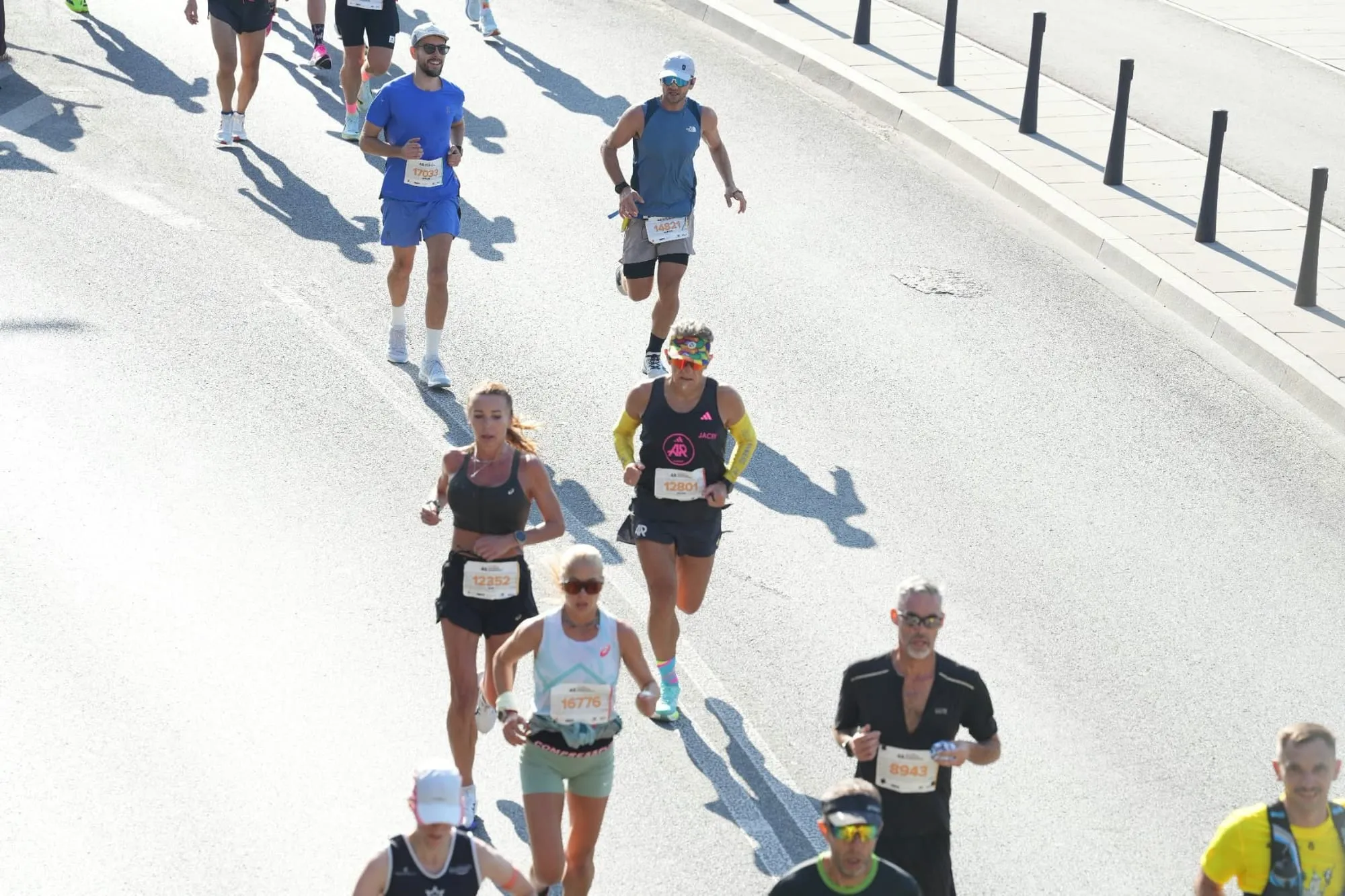
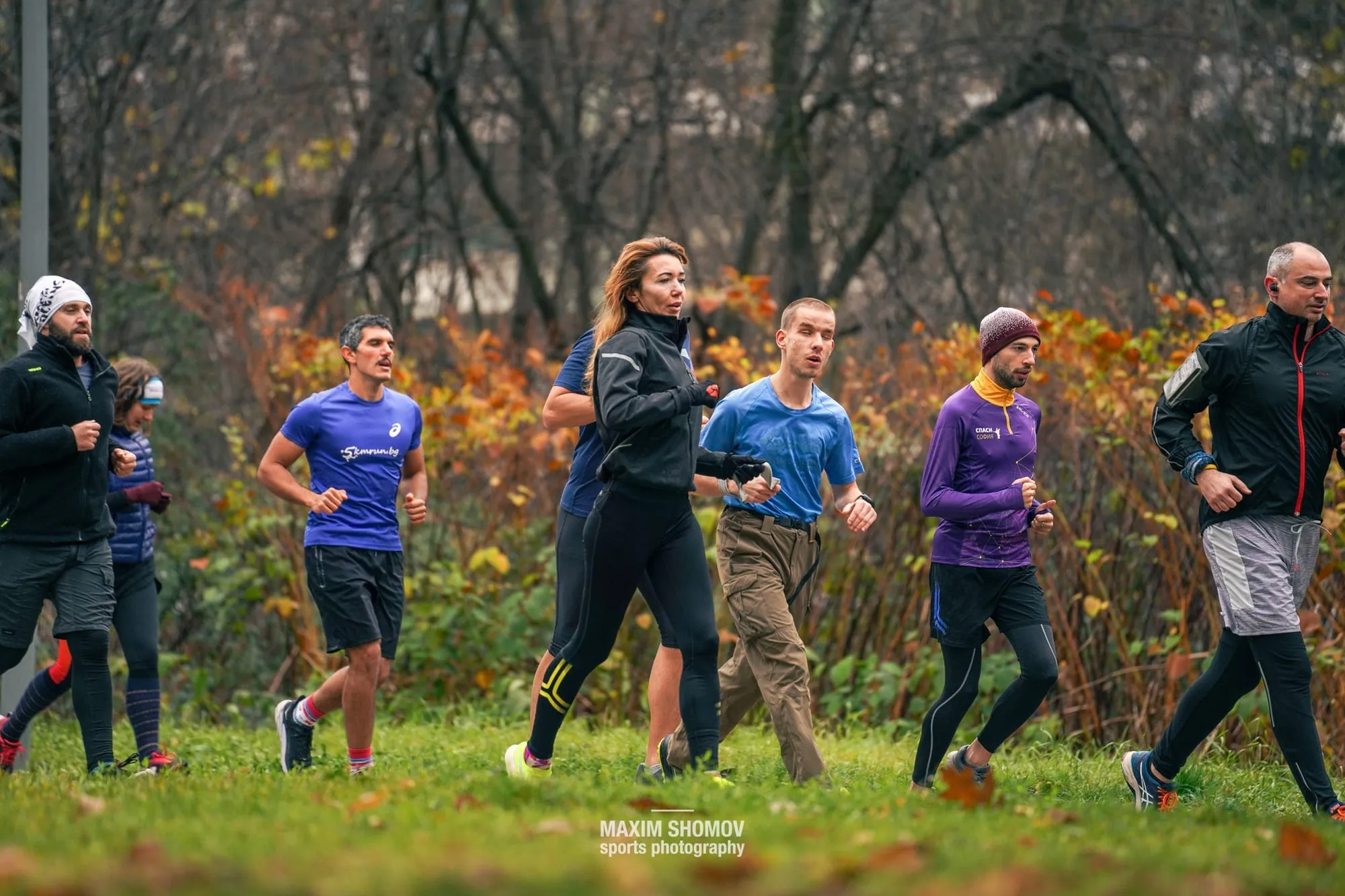
We're at the start of 5kmrun. 5kmrun, as you can tell from the name, is a 5-kilometre run for amateurs. It takes place every Saturday morning, simultaneously in several parks across Bulgaria. I've been going to it for years, but this is the first time I'll be running with a blind person.
True to form, I arrive 30 seconds before the starting signal and start searching the crowd for “the blind boy”. I find him just as we set off, and on the move we work out how to guide each other. He holds one end of a strap, whose length is adjusted by winding it round or unwinding it from the wrist. I take hold of the other end.
It takes me a while to polish my technique as a guide for a blind runner. At first I remember to say “sharp left turn”, “sharp right turn”, “gentle left turn”, “gentle right turn”. But I don't think to give the extremely important information about whether there are bumps in the road.
After Viktor had tripped several times on the uneven tarmac in the second kilometre, it dawned on me that I needed to add these details to my spoken news bulletin.
Then, being an artistic soul after all, I said “left” a few times when the direction was actually “right”, and vice versa. But even though I was giving the wrong commands, Viktor headed in the right direction.
He could sense the right direction through the tugging of the strap, as well as the sound of the footsteps of the people around us. That was the first time it struck me how developed his other senses are, but that was nothing compared to everything else I went on to witness.
With every run we do together, Viktor and I knock between 30 and 60 seconds off his previous time. He started at 30 minutes, and over 3 runs with me he brought it down to 27:40, 26:40, 26:16, and on the next run, which he did with Emil, he went under 26 minutes. That – with just 5 runs at 5kmrun.
When Viktor runs, he runs. It's hard for him, he gasps for breath, coughs, gurgles, snorts, but he doesn't stop. And from somewhere he always finds the strength for a final sprint.
One day he and I agree to meet “at the fountain” in South Park.
“Yes, I know where the fountain is. That's where I get off the 102 bus,” Viktor informs me.
I skip the question of how he manages on public transport – after all, he gets around with his guide dog, the Labrador Idalgo. But I'm curious: since he was born blind, how does he know what a fountain is?
“Of course I know what a ‘fountain’ is. With fountains the water first goes up and then falls to the sides.” Viktor's hands make a movement resembling the path of the water in a fountain. “Up” and “to the sides”, however abstract these notions may be for a blind person, are correctly understood by Viktor.
Then he asks me what colour his trainers are, because his wife wants to know. His wife is blind too. That hasn't stopped them climbing a five-thousander in Nepal, and now they're itching to climb a seven-thousander in South America (but I wasn't to worry, it was one of the gentler ones), exploring caves and a load of other madness.
He also goes swimming on Wednesdays. Oh, and he's really pleased that the runners have welcomed him so warmly, because the climbers didn't receive them with open arms at first. Him and Kalinka (his wife). And they loved climbing so much. Viktor pulls a sour face at the thought of his climbing ambitions, so unfairly nipped in the bud.
“In this case I'm on the climbers' side, Viki. People who can see lose their lives hanging off those unprotected crags, never mind you and Kalinka.”
On the day we have the conversation about the climbers, our run doesn't go well. Viktor has thrown himself into a new project – a body-cleansing regime, his third day on nothing but tea and fruit. The failed record attempt (there was no way it could have succeeded after 3 days of starvation) doesn't crush Viktor, and he invites me to sit down for a cup of tea after the run.
We sit down in a nearby café. Viktor brings the teas, climbs the stairs to the top floor of the café… all in all, at certain moments I forget that this is, as he himself likes to joke about himself, a “blind bat”.
We sit down at a table. Idalgo the dog meekly curls up at Viktor's feet and looks at me with his big gentle eyes. When he gets a bit older, Viktor will get a new guide dog and send Idalgo to his grandmother's, so he won't be jealous of the new dog.
“You still haven't told me what colour my trainers are,” he reminds me. “Kalinka insists on knowing.”
“They're electric green – I don't know if that means anything to you at all.”
After all, directions like “up” and “to the sides” could be explained through movement, the shape of objects could be learnt by touch, but COLOURS?
“Kalinka knows colours, she only lost her sight at 10, because of eye cancer. And when she turned 14 we started going out, I was 16 then.”
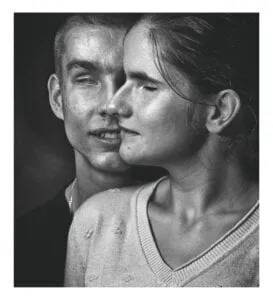
Apart from Kalinka, his wife, the person Viktor mentions most often is his grandmother. I ask him whether he has any brothers or sisters.
He has a sister, but they aren't close. She lives with their parents, whereas he doesn't.
Put like that, the information doesn't make much of an impression on me. Obviously a married man who, as has become clear from everything so far, knows how to handle life isn't going to live with his parents.
Viktor, however, adds a few more strokes to the picture. When he was born and they found out he was blind, his parents left him in a home. His paternal grandparents, though, couldn't come to terms with their grandson growing up in an institution when he had living relatives.
After a few years they took him in. Viktor remembers his 5th birthday, which he celebrated at his grandparents'. On the other hand, he has no conscious memories of the home where he spent the first years of his life. He found out about it completely by chance, once he'd already grown up.
His grandmother and grandfather gave Viktor all their love. I'm telling you this not to judge the parents – Viktor himself doesn't judge them either – but to give a complete picture of the circumstances in which this extraordinary boy grew up.
Viktor constantly seeks out contact with sighted people. The others, “blind bats like him” (his words), sit at home and never go out anywhere. He finds it more interesting to talk to active people.
We finish our tea and it's time to go. I offer to give Viktor and Idalgo a lift somewhere. Well, this weekend he's staying at his grandmother's in Suhata Reka, so if it's convenient for me, I could drop him at the stop for the 120.
It's convenient. Jump in the car, Viki and Idalgo.
Before that, though, Viktor opens the boot of my car and puts his backpack and poles in it, which he always carries with him. Then he and Idalgo settle in next to me on the front seat.
I'm just turning onto Vaptsarov when I see a 120 bus ahead of us. We decide I should put my foot down, overtake the 120 and drop Viktor at the next stop, so he can catch his bus straight away without waiting.
The “chase” makes me tense, because we hit several red lights and we're only just, just ahead of Viktor's bus. At the stop I pull up with the hazards on so Viktor can get out, and the bus stops right behind my car.
In my opinion there's far too little time for a blind person to transfer from my car to the bus behind, from which people are already getting off.
“I think you'd better wait for the next bus, so you're not rushed,” I call after Viktor.
I don't know whether he hears me, because he's already gathered up Idalgo and got out of the car. I look in the wing mirror and see Viktor, as if he were a person with the full use of all his senses, open my boot and take out his backpack and poles.
God, I'd completely forgotten he had luggage too. Viktor carefully closes my boot and then, at the last moment, backpack, poles, dog and all, he leaps onto the bus.
If I'd watched this manoeuvre of his from the side, knowing nothing about him, I'd have said this was a man who can see.
Many people can see. Many people can come, many can go. Many people can run, many people can swim, many people can forgive, many people know how to win.
Not many people, though, are called Viktor, and few of them can do all these things at once. Only one of them is blind.
Veni, Vidi, Viki
P.S. If you think there's no way at all we can help blind people, that's not true. Have a coffee with Viktor and he'll tell you about the Guide Dog Academy, which is looking for foster parents for its puppies. You can be the foster parent of a baby Labrador for 18 months, take it out and about, on public transport, to restaurants and so on – all the places where this puppy will guide its person once it grows up.
The bad part is that once you've grown attached to the puppy, they'll take it away from you; it won't be yours for ever.
But then you'll be helping people whose sight has been taken from them for ever.
The photos in the article are by Maksim Shomov and Ivaylo Petrov