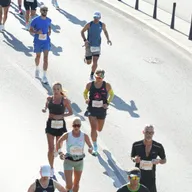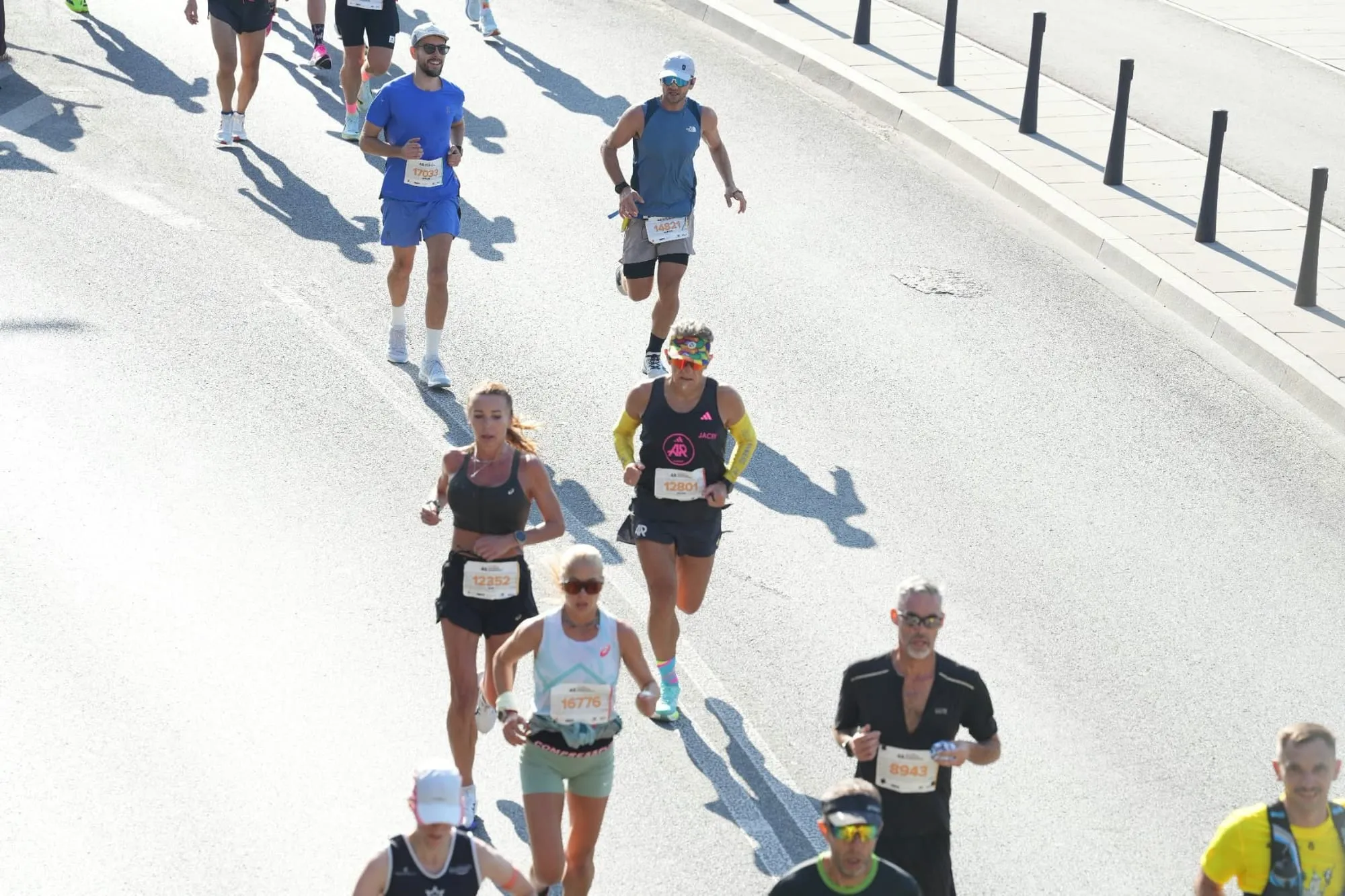


“Now, what happened today, that's what you should write a blog about,” says Andro, leaning on the railing that marks the relay changeover zone while he generates ideas for my future creative projects.
He adds:
“It's easy to write blogs about good performances, it's harder to write about…” He thinks carefully before settling once again on the same safe phrase: “…about what happened today.”
No problem, Andro. Yesterday you came up with the idea for the blog, today I'm starting to write it.
And by “what happened today” he meant my swim in our relay at the Utopia 2026 triathlon. By tradition I swim and run, and he's on the bike.
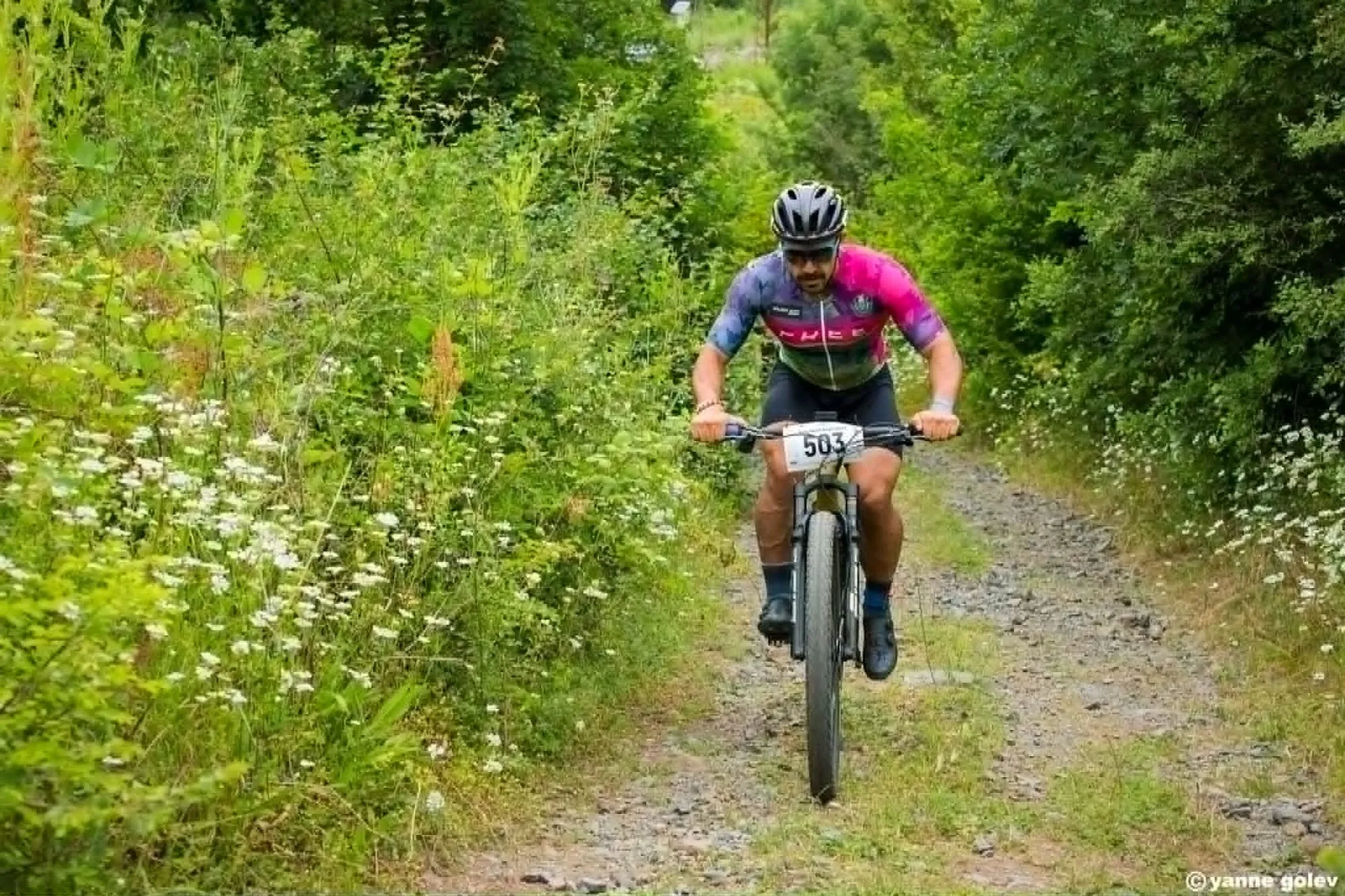
Andrian is merciless, brutal and final on the bike, so proven over the years that his name is a synonym for victory. I've bored you enough with his cycling successes. On top of that he runs strong too: his marathon debut was under 3 hours, and at last year's Vitosha 100 he set a new duathlon record (12:58:56), beating his own record from 2024 by more than 45 minutes. I don't know whether he finds it boring having no competition at all and racing only himself, but on that front he can certainly find sympathy and understanding from very, very few people in the world, one of whom is this man:
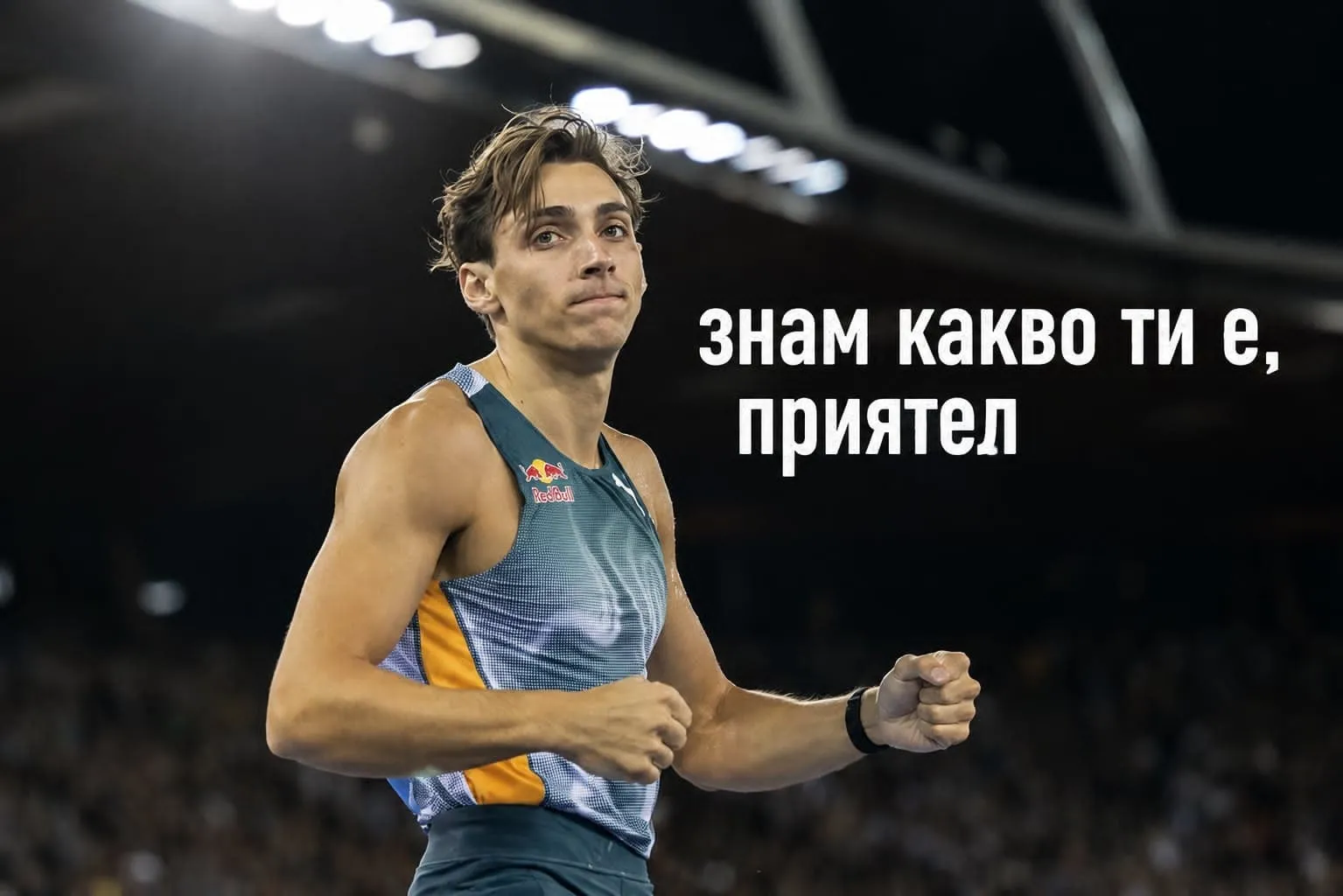
At odds with his thoroughly deserved star status, Andro doesn't take himself seriously at all. He's the super-relaxed, funny conversationalist whose company you can unwind in. If you don't know what he's capable of, you'll never find out, not if you're counting on him to tell you himself by skilfully-casually-irrelevantly slipping the subject of his sporting achievements into a conversation about something neutral. Something almost all the rest of us do.
In short, Andro is a legend. All that was asked of me, for a championship title in a double relay with him, was more or less not to drown in the swim.
Well, yes, except I went and drowned.
Almost, anyway, but if one of Utopia's rescue boats, which by sheer luck was puttering about near me, hadn't reacted instantly, you wouldn't be reading this blog.
On 13th June 2026 I realised the vital difference between your body “locking up” during a running race and during an open-sea swimming race.
When you're running, you slow down or you stop. Yes, it's very unpleasant, given all the training and hopes you've poured into it, especially if amateur running is a little piece of the puzzle of your identity. And especially if the race is a key one for you. It's happened to me and I know. But you've got solid ground under your feet. On it you can collapse, roll around, howl, cramp and throw up. It's there for you, it keeps you safe, it holds you up.
Whereas if you “lock up” during an open-sea swim (I use that expression because it describes most precisely what happened to my body at the Utopia 2026 triathlon), then the solid ground is 5 or 6 metres away from you and it no longer holds you up; now it's called the bottom. If you get there, it's too late, my love, for flowers. Unless the flowers are a bouquet they fold into your arms, forgive me the black humour.
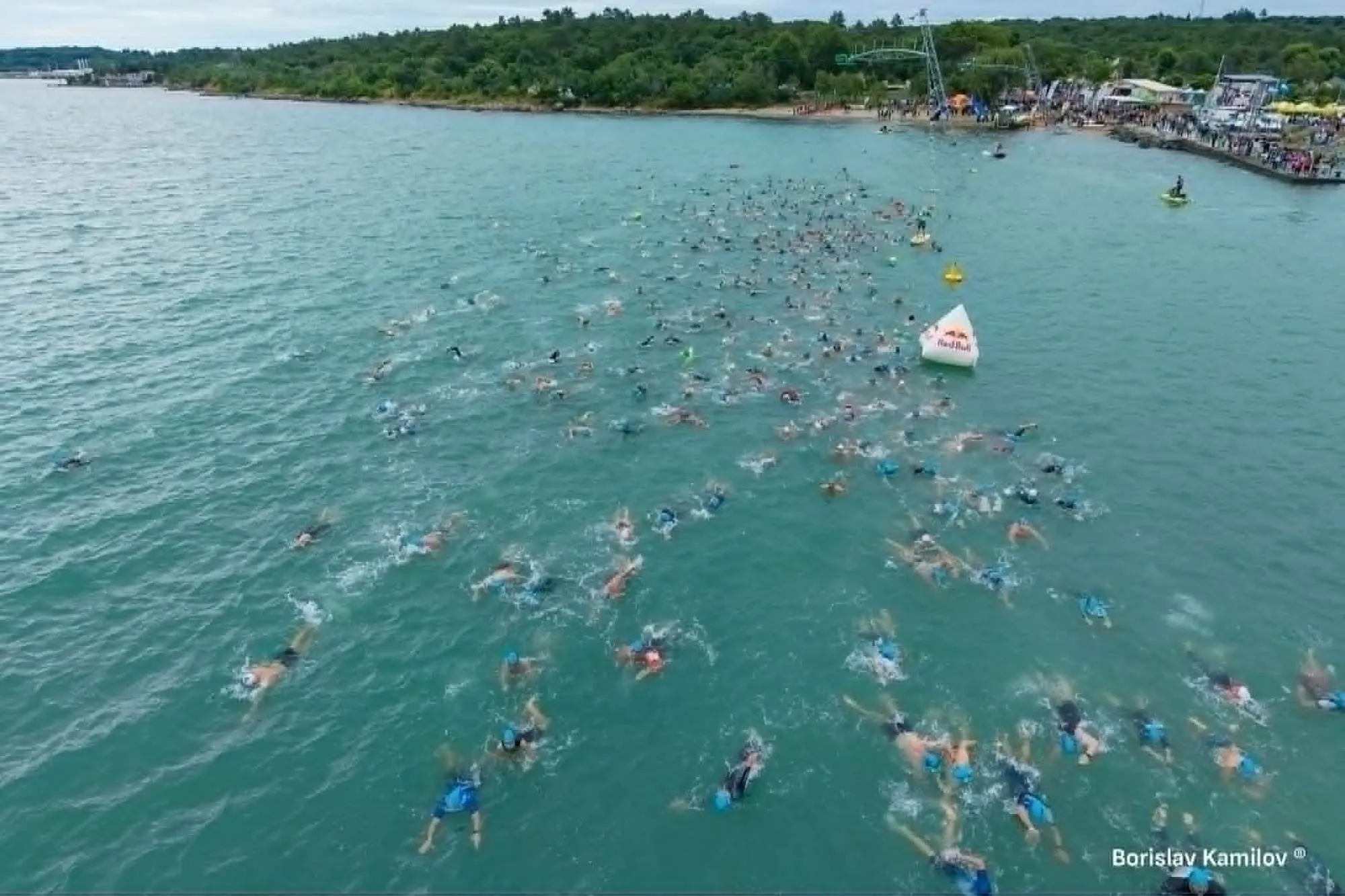
But let's go back to the beginning of the story. In a triathlon the disciplines are arranged like this: you start with the swim (in this particular case 1500 metres), followed by the bike (again in this particular case 40 km of mountain biking), and the last discipline is almost 10 km of cross-country running. We relay competitors hand over by passing on a tracker band worn on the ankle. From what I've seen, if you've got a strong cyclist, you've pretty much got it in the bag, since the bike is the biggest chunk and so strong cycling can “save” the most minutes in the overall result.
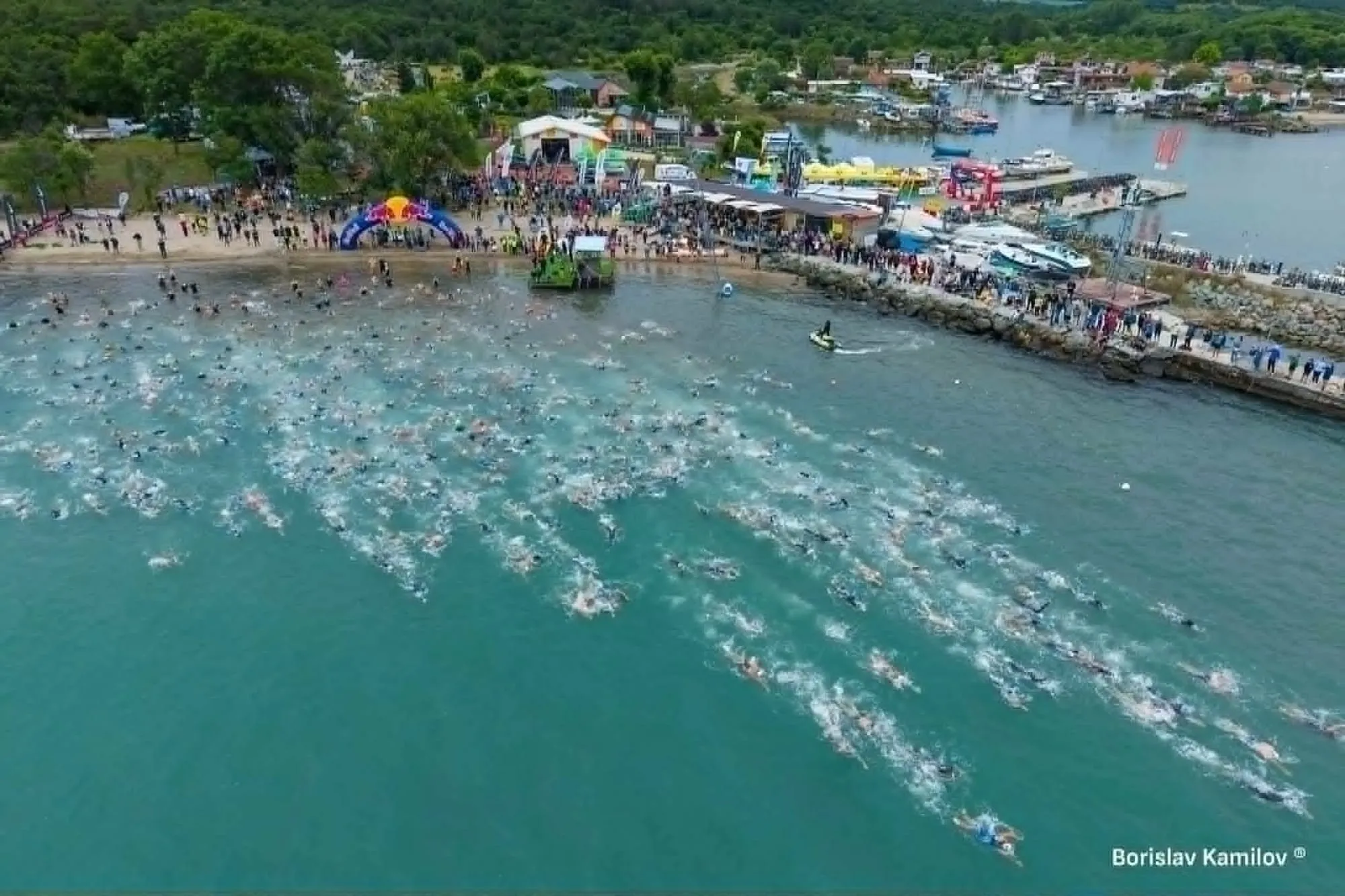
But to get to the bike, you have to get through the swim, a discipline I'm mediocre at but insist on taking part in. I find swimming exciting and it pushes me out of my comfort zone. All year round I swim twice a week: a thoroughly inadequate volume in general, but enough for my goals at this particular event (after all, I'm on a team with Andrian, who'll once again be teaching everyone a lesson on the “bike” leg after me). Besides, if Andro is on his own, as we've already mentioned, there'll be no wondering at all about who'll come first, whereas combined with me and my swimming abilities we now have intrigue, twists, a climax and a resolution. In other words, we provide everyone following the double-relay standings at the Utopia triathlon with all the ingredients for an intriguing narrative.
How does swimming take me out of my comfort zone, you ask? For starters, I simply can't do it. But there are two more important factors: I can't stand the cold in general, and cold water in particular.
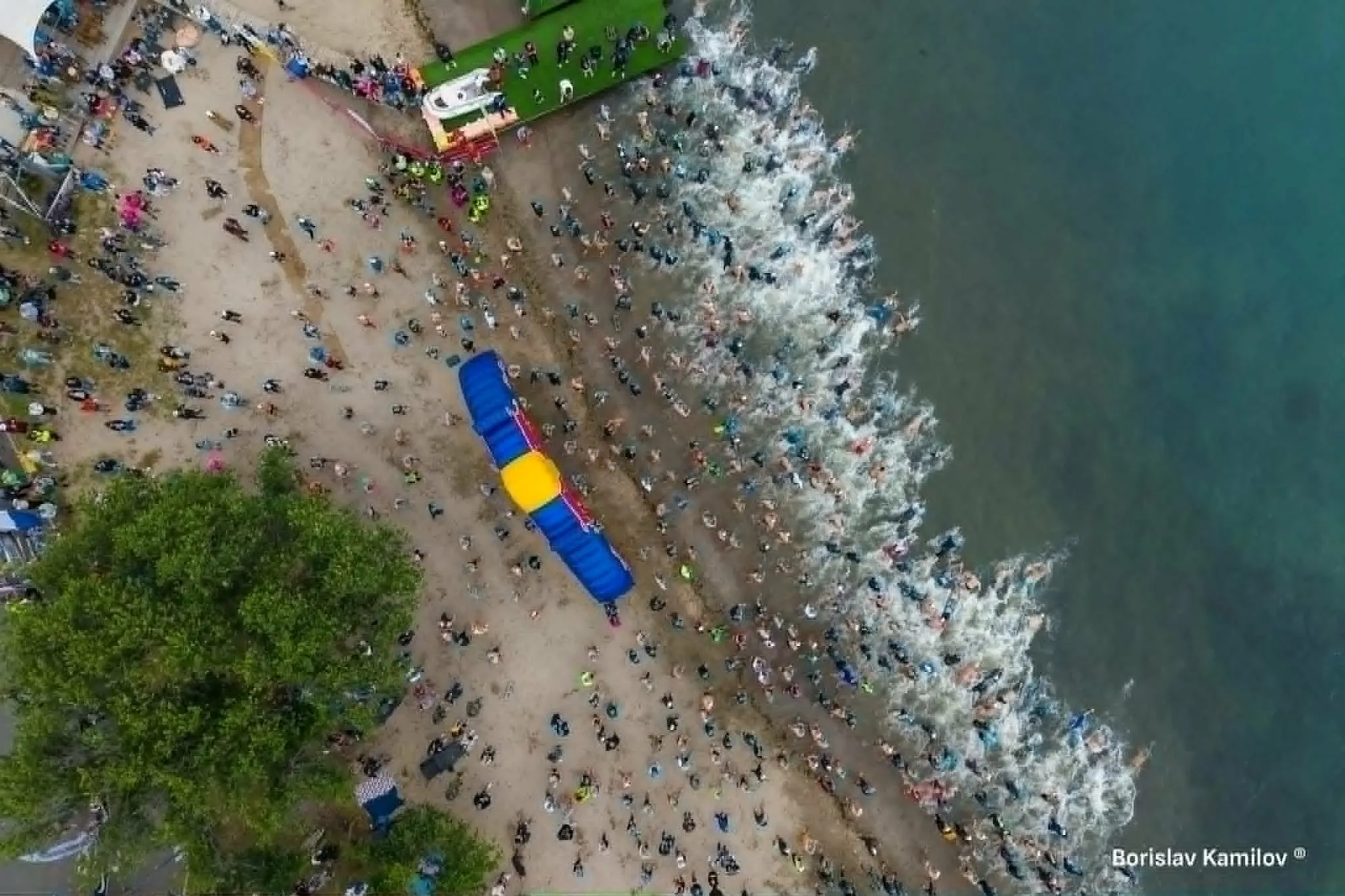
And most importantly: at the start of Utopia hundreds of swimmers set off at the same time (more every year; this year there were 800 of us!!!).
That's something you can't train for in a pool. The experience in itself is, for me at least, terrifying. Imagine you're a blueberry and, together with 800 other blueberries, you've been tipped by the Gods of Amateur Sport into a blender with a splash of milk, because they've decided to make themselves a divine smoothie out of you for breakfast. When the start of the swim is given, the blender button is figuratively pressed and all of us blueberries, like it or not, end up in a scrap.
My problems started even before the start. The weather was cold and very windy, the sky low and unfriendly. In perfect sync with the gloomy tones in my soul, which was already tasting the Arctic cold of the water. This forecast of mine was based on the fact that while I was collecting my race pack, going through the medical check and the other formalities, I was wearing two jackets. And their combined armour failed to protect me from the icy gusts of wind.
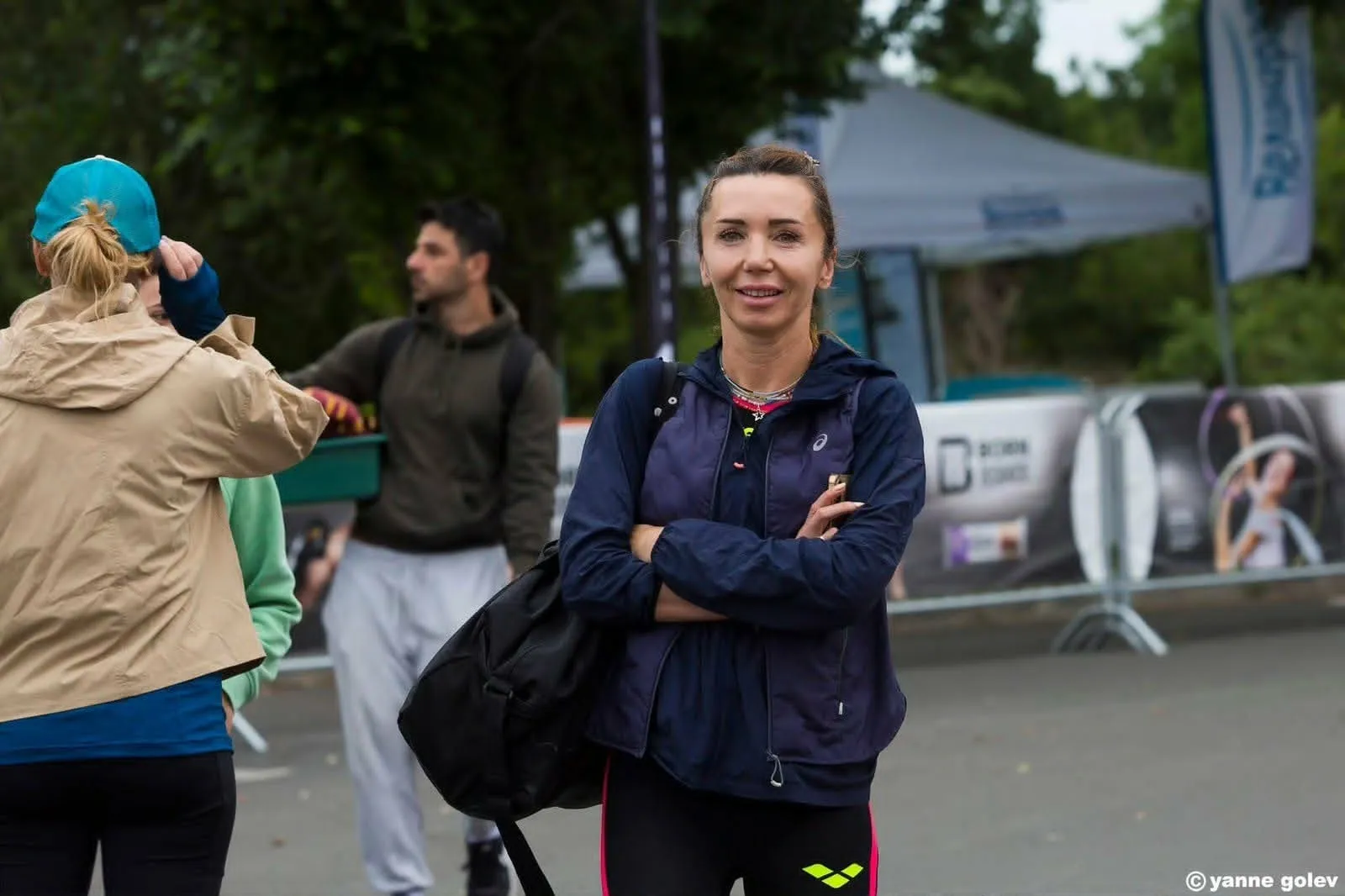
On top of that, people I knew at the start were asking me why I'd brought a wetsuit (mine isn't even a wetsuit, it's some faster version of one called a powerskin) and not neoprene. “That thing of yours is Lycra, it won't keep you warm at all,” friends and acquaintances shook their heads, snuggled up in their warm little neoprenes.
The fact that it wouldn't keep me warm later turned out to be the lesser evil, because when I waded into the water at the starting signal I found it warmer than the air. The big problem with my extremely expensive wetsuit turned out to be its size.
From previous years I've learnt that if your swimming kit goes on easily, even if it feels snug, it means it'll be too big once you're actually swimming. An easy-on wetsuit has always guaranteed me jets of water rushing in through the gaps between it and my skin. All those jets of water, after doing a lap of my body, would finally settle into a sort of water “belly”. It weighed down even further on my already wobbly attempts to stay afloat, fluttering on the surface. Based on that experience, this time I got a wetsuit so tight that it took me 40 mins to put on. No way water's getting in here, I thought, rubbing my hands, sure that this time I had it in the bag.
Again from my experience of past Utopia Lionheart races, I knew that about 100 metres after the start I'd get something I'll call a “panic attack”. In my case that feeling is triggered by the sight of hundreds of people around me fighting for a better position in open water. The water boils and churns, other people's elbows and knees crash around me and onto me, accidental kicks and slaps are handed out, and all of this in the open sea.
The feeling is that I tense up and lose control of my breathing, which gets as fast as if I were running at 3:30 pace, and on top of that the rapid breathing starts turning into desperate and utterly inarticulate moans and shouts on my part. Not shouting anything at anyone in particular. Maybe just to let off a bit of stress.
In previous years I got through this phase by turning over, swimming a bit on my back and concentrating on calming my breathing. When my eyes are looking at the calm blue sky instead of the bacchanalia around me, and when I get back control of my breathing and my movements, the panic passes. By that stage the swimmers have thinned out a bit and I can switch from backstroke to front crawl and carry on.
This year things started off more or less according to the familiar script. About 100 metres from the start the panic attack took hold of me, as usual. Again as usual, I turned over to swim on my back for a bit. While I was swimming on my back, someone in the melee grabbed my foot. I found out later from Emo (because the same thing happened to him) that they pull your foot when you're veering off the course. A kind of signal to look around and get back on the right track. Who are these people with superhuman abilities who, while swimming, can look at their watches, the route, and on top of that watch what everyone else on the course is doing…? Experienced swimmers, clearly.
Inexperienced swimmers like me, however, read that signal by projecting their own abilities and primal urges onto other people's actions. That happens in life too, but it's a subject for a separate blog, I'd go so far as to say a whole separate book.
Back to the swim: in what situation would I pull someone's leg in the water? Only if I were fighting to stay on the surface and, in my desperate struggle for survival, started grabbing whatever I could find around me to keep me from sinking.
Along those lines, I decided I was the straw some would-be drowning man was clutching at. Clearly the poor man had drawn the shortest of all the straws by picking me.
I could feel my chest squeezed to bursting point and my legs getting heavier. But I still thought I could get through the panic attack. I've done it before. And after all, this is a race, in a relay, and if I can just claw my way to the shore, Andro will get on the bike and kick the backsides of everyone who pulled me in the water (and the ones who didn't, too).
I tried to concentrate on the process, and therefore on my technique: fingers in first, pull back, not down, high elbow, kick from the hips…
…Oh, come off it, who are you kidding, Nia!!! Technique, my foot, my legs were paralysed and sinking as if they were made of lead, and my elbow was practically bouncing back with every stroke… only now did the realisation cut through my mind:
!!! I'm wearing a wetsuit so small it's slowing down my blood circulation! (And no, I hadn't swum in it before)!!!
That thought finished me off and my breathing finally turned into snorting and grunting. I flopped back onto my back in the water.
Among all the animal noises I was making while breathing, I managed to put together a “Help” to one of the rescue boats circling around. I tried to relax on the surface of the water so as not to sink before it arrived. The panic had gripped me so tightly that even staying on the surface wasn't easy.
The rescue boat came instantly. By that point every single movement was hard for me and I could barely manage to grip with my fingers the buoy that these good people in the boat, who literally saved my life, held out to me.
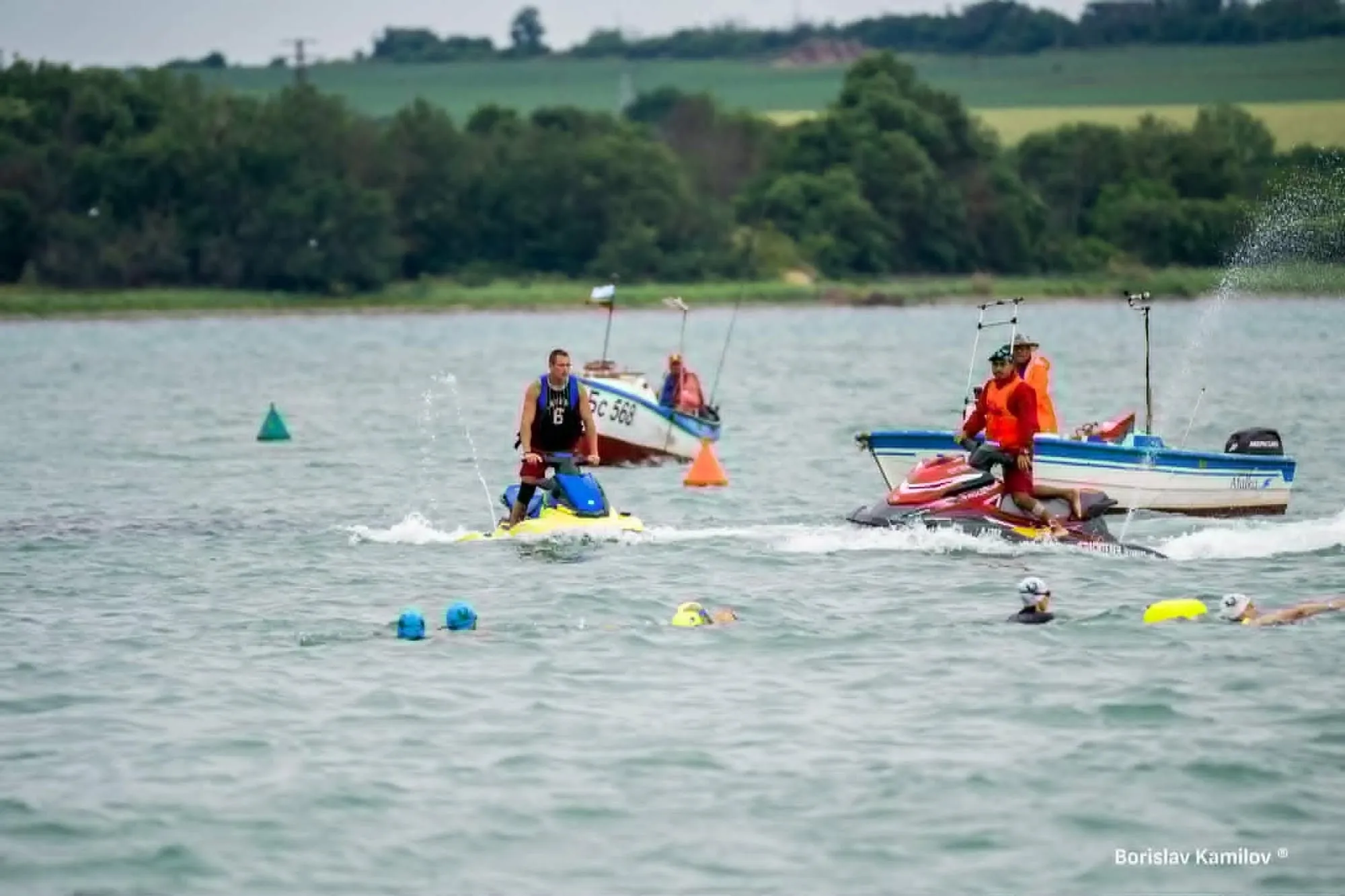
Thank you from the bottom of my heart, strangers, and I bow down to the ground before you! Thanks also to the organisers, because the boat responded in a flash.
Of course, exactly 30 seconds later my gratitude to life and to my rescuers started giving way to a huge, cold disappointment. But it wasn't mixed with regret. I've DNF'd running races before and regretted it. I've reproached myself for not having the mental strength to endure the physical suffering of running.
Whereas here I didn't regret my decision to call the boat one bit: this was about my life, in circumstances beyond my control. Managing my conscious and subconscious mind in critical situations is still very much a skill beyond my control. Establishing that control is one of the big goals of my life, and sport is one of my means of making progress along that path.
I screwed up the relay, I screwed Andro over, but it was the only right thing for me to do.
Andro isn't one to make a drama out of things.
When, crestfallen and shivering in my wet wetsuit, I found him and told him I was a DNF, he leapt on his bike with the soothing words, “Well, at least we're in no hurry.” A brutal hour and 31 minutes later, Andro, in no hurry, came back to hand the relay over to me for the run. Good thing he wasn't in a hurry, because otherwise I wouldn't even have had time for a coffee, after losing a fair bit of time peeling the damned wetsuit off myself (which, by the way, I'm selling).
Over the microphone we competitors were told that the first cyclists would arrive in 10–15 minutes. Meaning that in 10 mins or so we runners should head to the changeover zone. I, being familiar with my cyclist's capabilities, decoded this announcement quite correctly as “the first cyclists will arrive in 15 minutes, but yours is ahead of them, expect him any second now”.
And in support of my theory, before I'd even started taking my top off, Petya, Andrian's sister, came running towards me waving her arms: “He's coming!”
The fact that Andrian handed over to me well before the announced time can be proved by the unthinkable. I ran in a T-shirt, not a crop top. I would never deprive the photographers along the course of the sight of my 46-year-old six-pack, unless the relay was handed to me so unthinkably early that I had no time to take my T-shirt off.
I ran in a very glum mood. In theory I'm a follower of the Coubertin principle and I actively preach that taking part is what matters most. But my taking part in a relay that would have been champion if I hadn't personally knocked it out of the standings was not a positive experience. And I can only imagine what it was like for Andro. And to top it all, the standings hadn't updated in real time and my DNF in the swim hadn't been recorded. Instead, my swim had been given a time of 28 mins. That's 5 minutes faster than I'd manage in my wildest dreams, in the most perfect circumstances.
So as I ran, I got ovations at every checkpoint, and when I finished, the spectators at the finish, thinking they were watching a mixed team finally become double-relay champions, erupted in applause as if Eliud Kipchoge himself were crossing the line.
All of it undeserved.
But all of it entirely possible, if I work a bit on my physical preparation and a lot on my head. Lately I've been seeing the little obstacles in life as a wonderful excuse to work on myself.
Next Sunday, on 21.06, I'm going back to the same place, Chengene Skele near Burgas, to take part in the Utopia Aquathlon. I'll go back to the same place to swim and run on almost the same courses.
With my therapist Vlado we picked apart, as far as we could, the reasons for my DNF in the swim. He always makes me think about whether something is an opinion or a fact. It's a fact that I DNF'd. But what's the reason I didn't get through the panic attack that in past years, with much less swimming experience, I did get through?
Is the real reason my tight wetsuit, or my tendency to self-sabotage? Vlado's opinion is that only the wetsuit is new in the picture, so he's betting on that. I've been self-sabotaging since I was a child.
On Sunday I'll have new kit, thanks to Desi Vodenicharova, who gave me her triathlon suit. I swim in the sea in it every day, and it's the right size.
On Sunday we'll establish as a fact whether the size of the wetsuit was the problem. Dimo Benev has assured me that the rescue boats are on full combat alert at my disposal, so that I can carry out my experiment in peace.
I hope I don't end up needing them.