
Lucy and Ann had been friends since childhood. A friendship between women that lasts like that is only possible when there's a shared past. Nick and Tom had never met until the two women introduced them, after the men had finished their military service. From then on, their lives became one. They were about 21. Nick and Tom were at university, while Ann and Lucy worked and supported them – I'd even say they fed and kept them.
Nick was in love with Ann, Tom with Lucy. When the men graduated, the four of them got married in a joint ceremony with nobody else there. They carried on seeing each other almost every day even after the men moved into their wives' houses in their neighbourhood. Their first children were born. Soon after that, Tom and Lucy went abroad to work and never came back. There was no Internet in those days, and their only link with Ann and Nick was letters, once a month. Some thirty years later, Tom and Lucy, and their two children too, came back home to Bulgaria.
Once they'd retired, the four of them decided unanimously that the city wasn't for them any more. Nick and Ann had a house in a village that was just right for the “golden” years. They put their affairs in the city in order and moved there for good. Nearby there were two mountains, a river, a reservoir. They took up hiking again, a weakness they'd shared since their youth. In the mornings, over coffee, they'd pick a route and drive to the starting point. Within a 50 km radius they “combed through” the lot.
Sometimes they'd spend the night in a mountain hut, do another trek along the ridge the next day, and when they came down they'd take the bus back to the car. They also did the rounds of the nearby historical, geographical and ethnographic sights.
They'd get back around 5 pm, have a bath and dinner, and then sit chatting. Naturally, the central topics were memories, children and grandchildren. Later they'd give themselves over to their other passions. The biggest of these – bridge – they played several times a week. They also played dice, adverbs, associations and snitches, and did crosswords. They bought real milk from the people in the village. They read lots of books. They grew flowers and vegetables, without getting carried away. They picked mushrooms and herbs, and went fishing.
Whenever they ran out of memories, they knew they could always count on some brand-new one, freshly dug up from the depths of Ann's memory. Her head was like a child's piggy bank: stories went in and stayed there until you broke it. They joked that this was exactly why she wore hats in the biggest sizes. Their children visited them now and then. Their life seemed deservedly blissful. The years slipped by serenely, and the four of them passed eighty. But, as they say, even fairy tales come to an end. Health problems visited them often. Their outings dwindled to very short walks.
Their overall vigour, their cheerfulness and optimism vanished. They stopped moving, started lying about, staring silently at their symptoms. The car sat idle too, and watched them from the yard no longer with reproach, but with understanding. One evening, sitting at the bridge table and seeing that it wasn't going anywhere, Nick said:
“I don't know what you think, but I reckon it's time we brought our earthly journey to a close.” In the silence that followed, he added:
“Before we become a burden to our children and to God Himself. We've lived well together, I don't see why we shouldn't die together too. Please, think about it, and let's discuss it one of these days. I'm not forcing anyone, I've already made my own decision.” They knew that he'd always loved a bit of theatre and that he was impulsive, but they could also see that right now he was speaking with complete deliberation and responsibility. A few days later Lucy said she'd thought long about Nick's suggestion and agreed. After all, their bodies no longer obeyed them, and this wasn't living any more, it was vegetating.
“Me too. My only worry is that it's a sin,” Ann added.
“Actually, what I'm proposing is a voluntary end to our agony and suffering,” Nick added. Tom agreed that this would be best for everyone, even for the children. All that was left was to decide exactly how it would be done. Nick began:
“Nobody remembers anything good about suicides and alcoholics. As if those people had never done good deeds, raised families, loved. Our children would be left with a grim memory of us. On no account must it look like suicide!”
They easily arrived at the idea of making it look like an accident, during a hike, for example. “They didn't make it back in time, poor things, their strength gave out” – that's what the children would tell themselves, and other people too.
“In fact, this could really have happened to us several times in the mountains when we were young,” said Lucy, looking at Ann. They agreed that it would happen at one of their favourite spots, 2 kilometres above the village, at the foot of the mountain, and that the day would be a Monday, in a week's time.
Perhaps deep down each of them had been hoping the others would waver, but clearly nobody wanted to be thought faint-hearted, and the Monday in question came. It was sunny but bitterly cold. They left the house unlocked, and on the kitchen table – a list of their children's phone numbers. They aired the place, took out the rubbish and tidied up. It mustn't smell of old people inside. The women remarked that the most important problem – with the children and with other people – had been sensibly solved.
The men each took a rucksack, as if for an outing, but almost empty, and the four of them, after making the sign of the cross over the house with the words “God before us, and we after Him”, set off along the road to the mountain. Right now nobody was thinking about anything except whether they'd manage to reach their goal. The first kilometre was the hardest. Their sinews felt as dry as old rope, and they were the most serious problem. They helped and encouraged one another. They rested often, but only briefly. They knew from experience that on a trek you mustn't lose your pace, even if it's an ant's pace. By the time they arrived, it had grown dark. They sat down in pairs, back to back. The die was cast! For a while they were silent. When their breathing had settled a little, they drank some water, and Nick took out a packet of cigarettes. They hadn't smoked for more than twenty years, but they each lit one.
“That was a good idea, best man!” said Tom.
They smoked their cigarettes without hurrying. They said a few words each and fell silent. Each of them drifted off into their own thoughts. In their heads they whispered prayers, wishing to drift off and for it to be over quickly. The moon rose. Compared with their faces, it was positively ruddy. Their sweat had started to go cold, and they were shivering even harder. The temperature was around freezing. Nick and Tom took off their jackets and wrapped them round their wives.
“No point now,” Ann joked.
“Well, yes, but we can't do otherwise,” the men replied.
“But you'll catch cold like that!” Lucy said out of habit.
“No point now,” Nick put in quietly.
They bowed their heads to their knees and fell silent. Each of them curled up inside their own soul. At this hour, on other days, they'd long since been asleep. After half an hour they began to drift off. The warmth was draining from their bodies, their thoughts growing more and more sluggish. The white death hung low over them. The forest and the evening breeze fell silent too, as if waiting to see what would happen.
The other three were already dozing, but Nick couldn't. When he too drifted off, he started dreaming disjointed phantasmagorias and horrors. An owl, or an eagle owl, startled him. It sounded to him like thunder from a black and terrifying sky. He was seized by uncontrollable panic and leapt up, trembling:
“Comrades, my dears, I propose we go home!”
He was impatient to explain and justify himself. They didn't seem to have heard him, but he could see they were shivering. He prodded them and repeated it, louder. He desperately wanted them to hear him, and right now.
“All my life I've chased things like this – now, right now! My mother, God rest her soul, often told me I was far too hasty,” he thought. To Nick, an eternity passed before one of them spoke:
“But will we make it?” Lucy asked. “I've got no strength left.”
“We're all the same,” said Tom, “but you know – the old girl's still got a trick or two up her sleeve. Besides, I've got a jar of honey in my rucksack, that might keep us going!”
“And it was never our business to meddle in God's affairs anyway. That was a sin, we might have burned in Hell,” Ann spoke up too.
“The honey was a good idea, best man! You always think of everything!” said Nick.
Their voices were feeble, trembling, slow, as if the sound wandered round the hollows of their heads and only at the very end remembered their throats and mouths. They got up as if in slow motion. Opening the jar of honey with numb fingers, the men managed with all the will and scraps of strength they had left. They all had some honey. The jar felt as if it were made of lead. They set off and creaked their way downhill like skeletons from a school biology lab. After half an hour the lights of the little village were already in sight. For the first time they thought that maybe they'd actually make it. The rest of the way took them about two hours. They got home very late, the village had long been asleep, and the house seemed to be saying to them:
“I knew you'd come back!” When they switched on the light, their faces looked like neon. Right now that didn't worry them; they were driven by hunger and cold.
“Does anyone want kachamak?” Lucy asked. “We've got nothing else but cornmeal.”
“You're a genius!” the others cheered.
“And after the kachamak, I'll treat you all to one more cigarette. So many times in my life I've said this would be my last, and it never was true,” Nick added.
“You're a genius too!” they answered him.
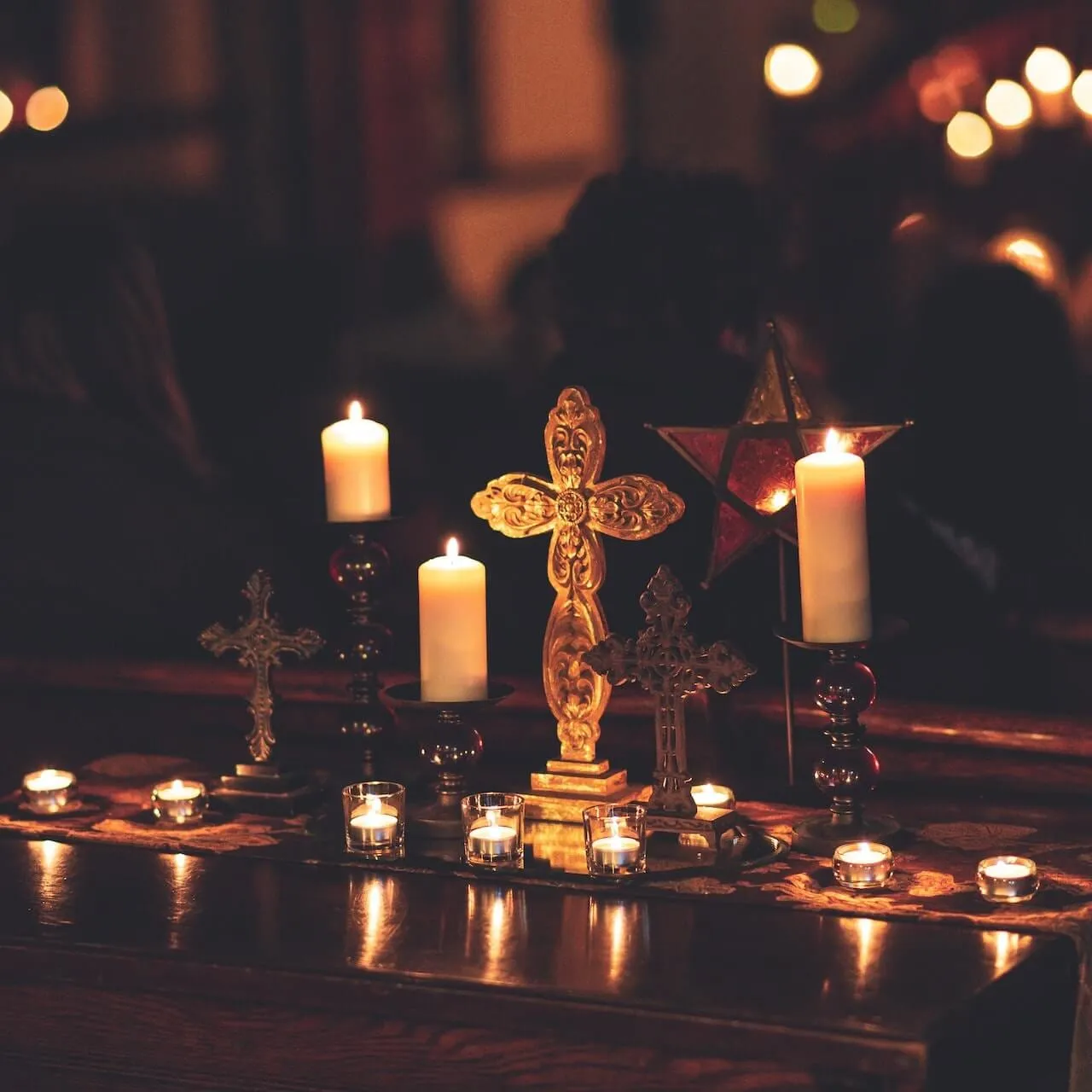
They lit the stove. The list of the children's phone numbers curled up in the fire. It had been a long time since they'd eaten so ravenously. They didn't feel like going to bed until it had warmed up everywhere. They made small talk, and after the cigarettes they lit the four long thin candles they'd brought home from the local church at Easter. Looking at the flames, Tom got up, switched off the light and said:
“These are our four sparks of life that brought us back.” As always, he was brief and to the point. Nick felt a weight lift, and Ann and Lucy added:
“Let's blow them out now and keep them!”
For three days they made it only as far as the kitchen. On the fourth day, though, they made it to the shop too and did some shopping. People looked at them as if they were ghosts, but smiled at them. On the same date every year after that, they'd say to each other: “Time for our sparks” and light “those” candles. They had come to call this ritual, in the churchly manner: “The Return”.
And “that Monday” no one ever mentioned