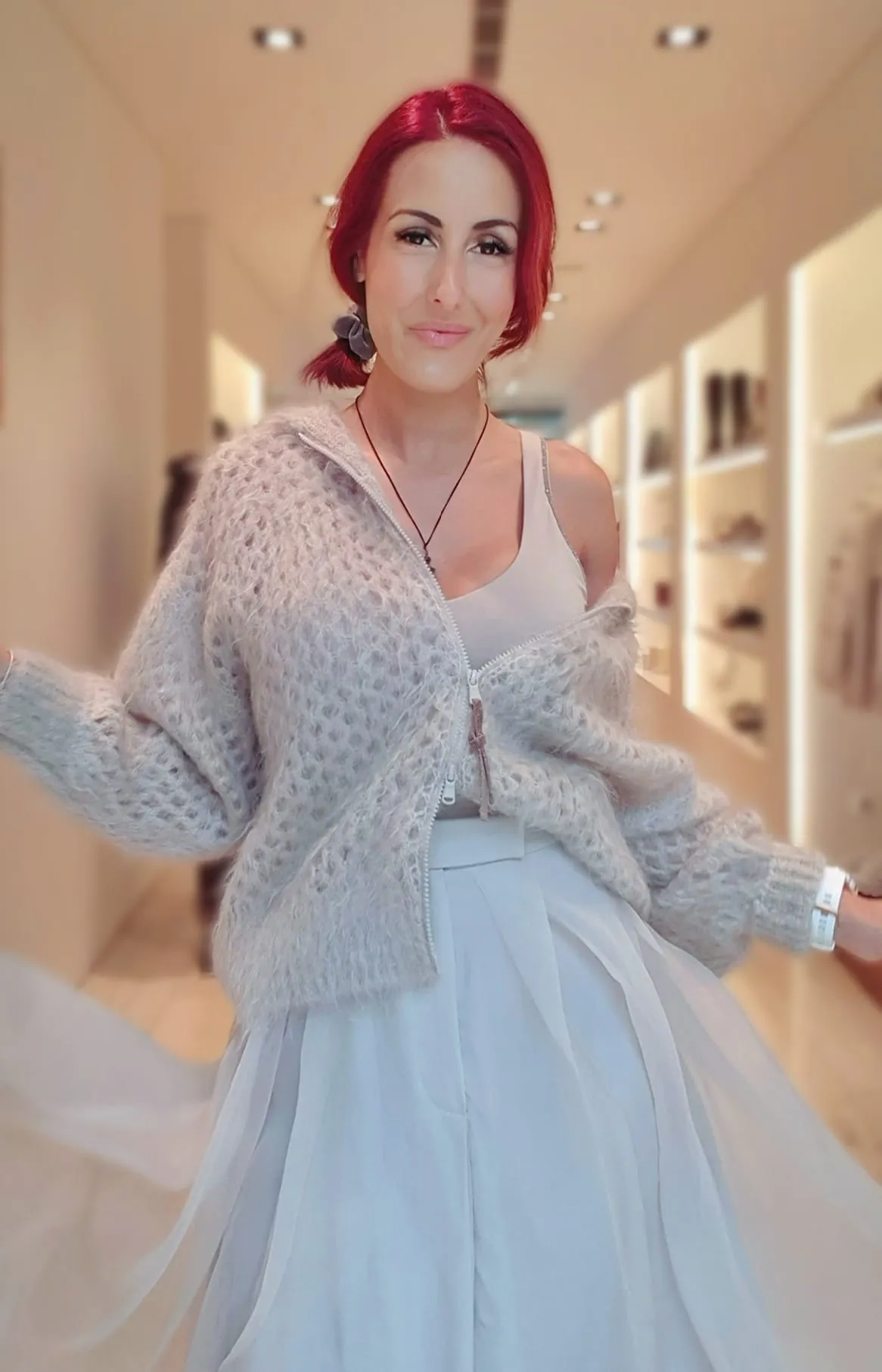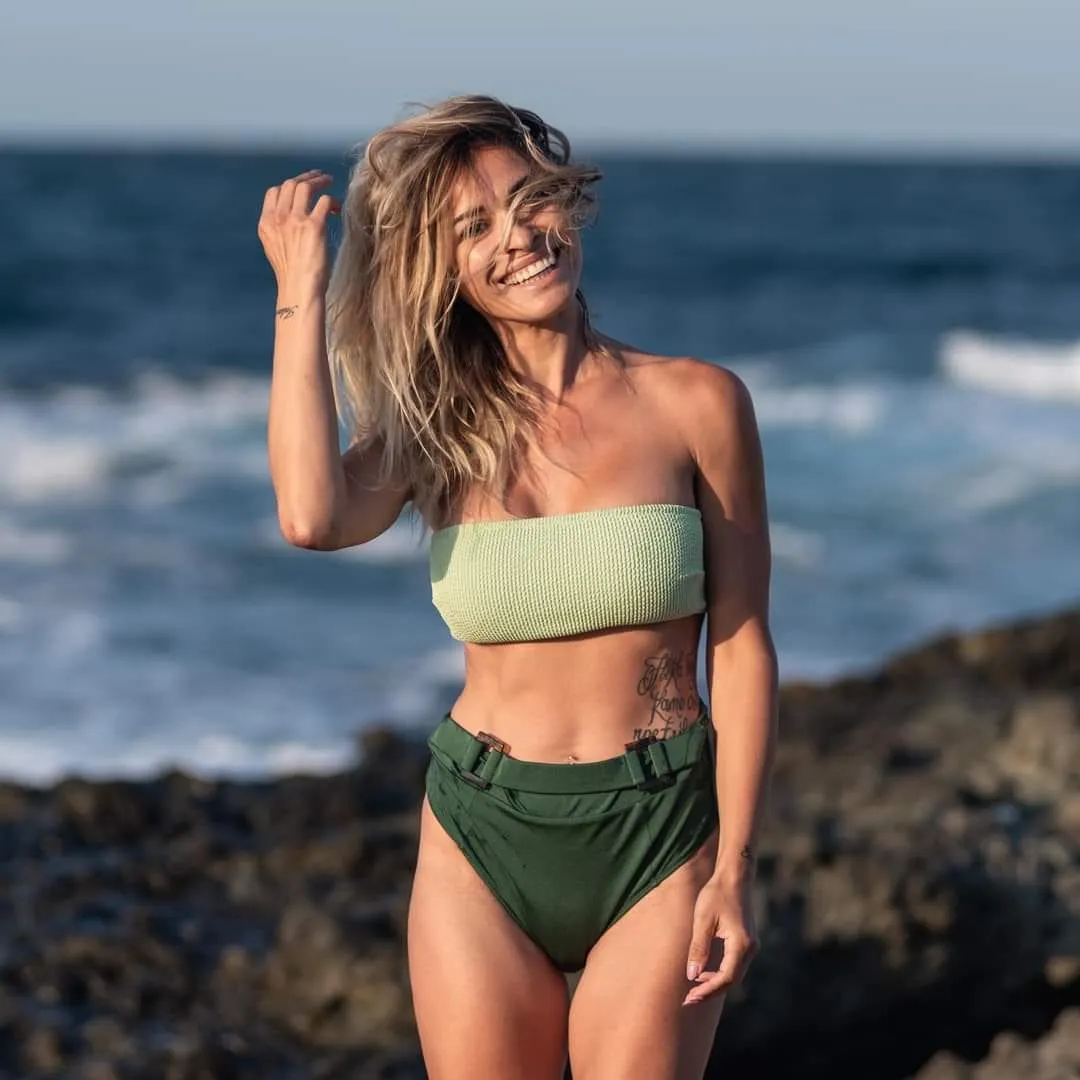

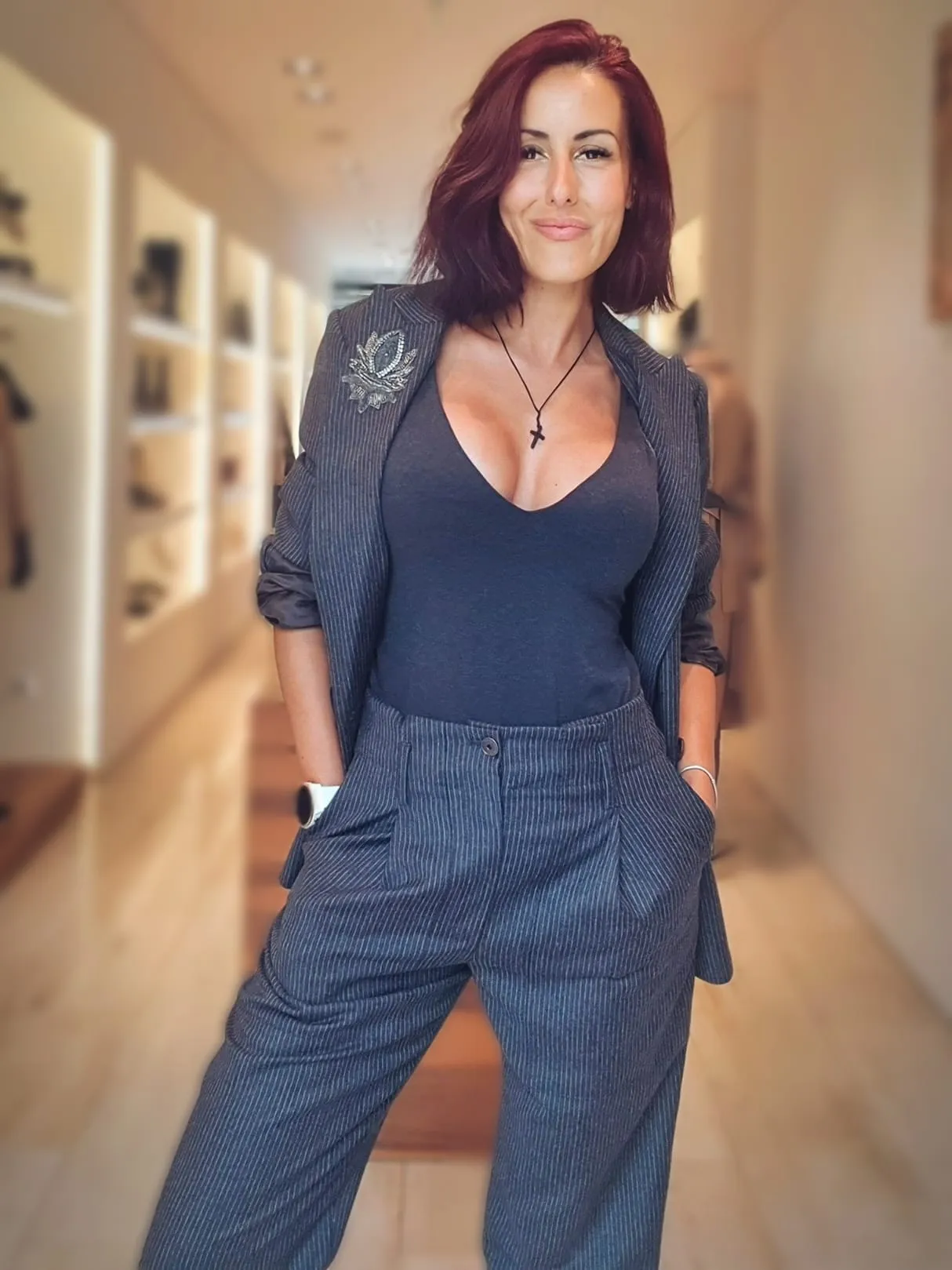
There isn't a single person in our running community who doesn't know Anna Vancheva. Every photo of hers sets off an avalanche of likes, hearts and comments.
Which in itself is no big deal – any photograph of a female creature can reach such heights. But most manage it under certain conditions and with certain manipulations that Ani has no need to resort to, such as:
-
Filters. Unlike quite a few ladies, whose edited social media look I've got so used to that I start to perceive it as their real one and can't recognise them in person.
-
Composition and caption that cunningly nudge the viewer towards compliments. My favourite trick is this one – the lady has had her photo taken against a backdrop of dazzling natural beauty. She may be facing us, or she may have turned her back on us. This choice is common when the subject hasn't managed to like any of her photos from the front, but at the same time feels an urgent need to brighten up her life with a post. So she strikes the “contemplating the gorgeous view” pose, with her back to us. She doesn't miss the chance, though, to offer us a view of her own – of her cute bum. The caption on such photos is always deeply spiritual, like:
“This beauty leaves me breathless!”
The formula works almost without fail and guarantees a queue of comments from naive suckers, every one of which says: “You've got it wrong – the gorgeous view is actually you.”
- Highly selective filtering of the raw photo material. Vancheva doesn't even have to pick her photos. Something that I, unlike the two points above, do. When we're photographed together at events, I absolutely have to go through the material before approving it for publication – where my eyes are closed, where my face is shiny, where the wrinkles show… Ani always waves her hand – post whatever you like, I don't need to look. The queen of photos is the queen of photos!
Of course, the fact that she hit the genetic jackpot in the looks department isn't all that impressive in itself. Lots of people have. I'm just using it as an intro to the blog about her. Because the first impression, especially in our digital world, usually comes from social media.
My first impression of her also came from race photos, and until we became “colleagues” on the FrontRunner team, we'd barely exchanged a few pleasantries. There was no way I could have guessed she'd become such an important and, I hope, lasting part of my life.
It's true that at first we were brought together by the little things, a.k.a. gossip. I was stunned by the investigative and analytical abilities of the Vancheva brain.
Say, for example, I've picked up some very exciting piece of gossip from Nakov (himself a sort of radar for juicy news in the running community).
Me: “Ani, guess what the news is about… (the runner's name)”
Ani: “Give me two minutes.”
Me: “I'll give you 10.”
Ani: “No need. 2 is plenty.”
Ani again over the next 120 seconds….
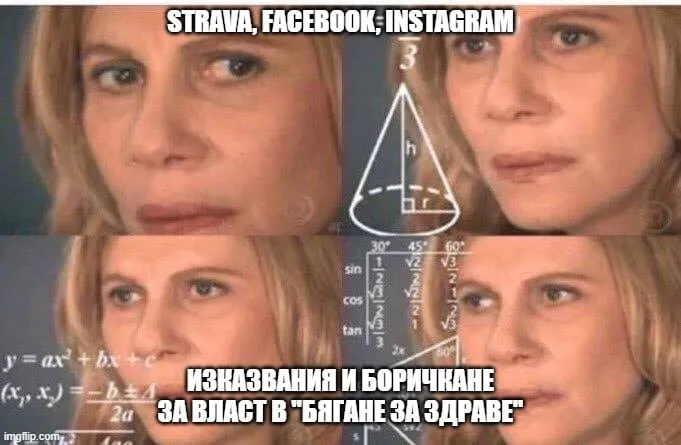
After exactly 2 mins:
Ani: “Right…. (woman's name) and (man's name) have split up.”
Me: “No way! How did you guess???”
Well, it was obvious, apparently. To reach this conclusion Ani had used 3 sources of information:
Instagram: For about a week the runner in question had been posting provocative selfies, with seductively parted lips, a deep cleavage, a lot of languor in her gaze and meaningful musings along the lines of: “Stars Can't shine without Darkness”.
The behaviour of a deeply hurt woman.
Strava: Her now ex had been running suspiciously often with (the name of a new runner), and always early in the morning, setting off from a spot that wasn't the park.
Facebook/“Running for Health”: And the finishing touch that set her suspicions in concrete was some power struggle in “Running for Health”. There, the runner in question had given a heart to a comment by the biggest online enemy of (her now obviously ex-boyfriend), in which he had spitefully and completely groundlessly questioned the ex's very own theory on optimising the lactate threshold.
Gradually we became so close that I felt comfortable enough to share personal things with her and found great support in her. Exactly the right kind of support, though – if she thinks I'm wrong, she argues it logically and makes me see myself from the outside, without making me feel told off.
And most importantly, in her communication with me she has never projected her own hang-ups onto me.
I discovered long ago that projecting your own hang-ups onto others is a defence mechanism for your own ego. As innocent as it is unpleasant. It's especially tempting to use it on the people close to us, the ones we subconsciously compare ourselves with. If we decide we're lagging behind in our imaginary competition with them, which they probably don't even suspect exists, we can become very suspicious and cruel precisely towards them.
It has happened that a close friend pinned all sorts of diagnoses on me – that I do something because my life is OBVIOUSLY empty, that I run because I OBVIOUSLY have demons I'm afraid to face, that I'm a cheap chalga girl because I've had implants (here I don't even need to write the word OBVIOUSLY) and who knows what else.
I've never had that kind of relationship with Ani. You'll say – well, the woman has had a nice, easy life, she isn't working through any traumas and hang-ups, why wouldn't she treat everyone with love and understanding?
Give me her life and you'll see how sweet I can be too.
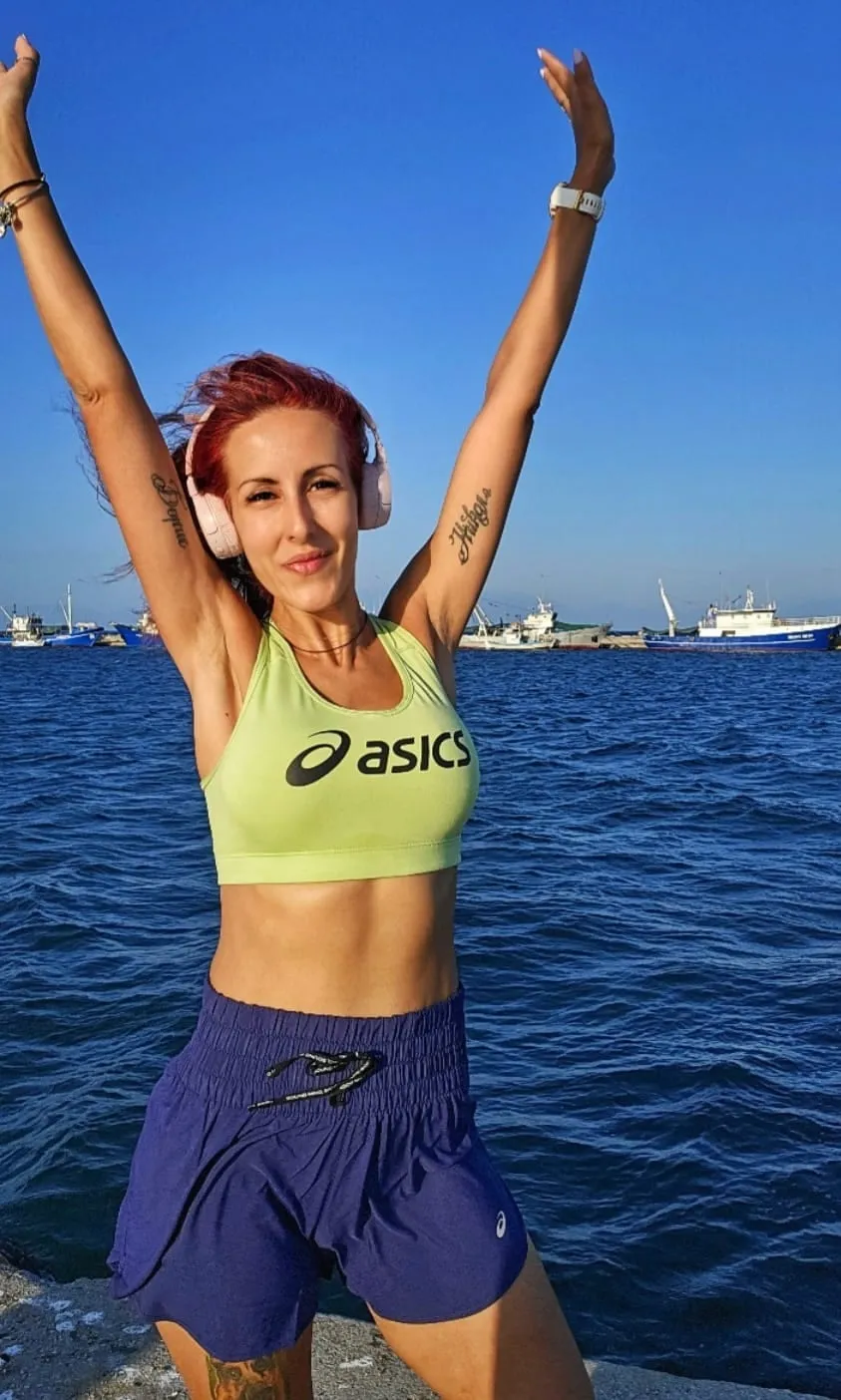
Well, I suspect you wouldn't want her life. At least not her childhood and teenage years, when all the emotional traumas are formed that we conveniently use as an excuse for our irrational and, in some cases, cruel behaviour as adults.
Ani came into the world as the fruit of her mother's love with a high-ranking party official of the time. The biological father, for reasons of his own, wanted nothing to do with either the mother or his daughter. He showed no interest in helping the child even when Ani was 2 and critically ill. To survive she needed a very rare medicine which at the time could only be obtained “through very serious connections”, which is exactly what the man in question was.
Right. We forget the biological father and move on without him.
Circumstances unfolded in such a way that for the first year of her life she had to be raised in a children's home. By that time her mother had also lost the support of her own parents. She had to fight for the physical survival of herself and her child, and managed to see her baby for only a few hours a week. So in the first year of her life, when the subconscious takes shape and a child most needs the presence of both parents, mother and father, Ani was left without a father figure.
The mother, who emotionally took on the role of both parents, simply couldn't physically be with the child all the time, given that she had to secure the survival of them both.
That period did end well after all, when at some point, once Ani was already walking, her mother finally decided to go back to her home town and her parents.
Being a single mother today is one thing, but being a single mother in a small town in the early 80s was considered a family disgrace. In keeping with the narrow-minded mentality of the time, Ani's grandmother and grandfather made it clear that they would only take their daughter back if she gave her child (Ani) up for adoption. In defiance of the parental order, her mother came back to the family home with Ani in her arms. Ani's grandfather, sulking, didn't even come out to greet them.
Except that Ani, without ever having seen him in her life, walked into the house, somehow found her way through the rooms, pattered straight up to her stubborn grandfather and hugged him, saying: “Grandpa!”
In a second, Ani went from a stain on the family's honour to her grandparents' favourite granddaughter, and stayed that way for ever. On top of that, her natural ability to melt grandfathers, and not only grandfathers, showed itself even then.
A few years later Ani's mother met the love of her life, and together they gave Ani a little brother and sister. Things seemed to be going well, until her stepfather started beating her mother in front of Ani. When she, by then a teenager, tried to protect her mother, she of course got a hiding along with her. She didn't get off with just beatings, but with psychological abuse too. If, for example, she'd forgotten to take the rubbish out in the evening, in the morning she'd wake up in the company of said rubbish, dutifully thrown out by her stepfather in her place. Only not into the bin on the street, but next to Ani's bed, right by her head. Just so she'd know.
I'd like to say this is rare in family dynamics, but we all know perfectly well that it isn't.
The only rare thing here is that the sum of all these circumstances somehow turned Ani into a kind, calm being who rejoices with all her heart at the successes of the people close to her, and at other people's happiness too.
Many people find her inspiring because of her physical transformation when she took up sport, which gets talked about a lot. For me, though, that isn't the most uplifting part of her, and I won't bother you with it at all.
Since in this series, dedicated to the women in my calendar, I focus on which trait of each of them I'd like to have – here I'm highlighting the trait of Ani's that inspires me most.
It's not letting the hardships in her life, even those lived through in the formative periods of her emotional development, darken the goodness in her. Ani is full of love and gives it out generously, not only to her children but to her friends too.
How she has managed it, I don't know.
All I know is how strongly a father's influence affects a little girl's psyche. I realised this only recently, when my own father died. While he was alive, I almost never dreamed of him.
But after his death I started dreaming of him very often. Yet in none of my dreams does he appear at the age he was when he left. I never dream of him as the helpless grandpa he was in his last years, and especially in the last month of his life.
In my dream he's always young, in his prime, when he was my idol. Usually he's holding me in his arms, telling me how much he loves me and how proud he is of me. And then, during the dream, I feel filled with light, warmth and happiness. A father is a little girl's first love and the yardstick for her relationships with the opposite sex from then on.
Then I wake up and tell myself – that wasn't just a dream. That was a memory from my real life, I really lived that. I have it, I had it, and it will be mine for ever.
I received his love when I needed it most – when I was a child. And yes, I took his fatherly love for granted, as it should be. For granted, because love is given by the parent to the child.
For Ani, the given was the absence of a father's love.
Perhaps the key to the answer to my question – how she managed to grow into a person full of kindness and love – lies in the mother figure. Ani received all the positive emotions needed for the healthy development of her personality through her mother.
I chose 8 March to publish this blog for several reasons.
The first is pure coincidence – Ani is the March girl in my calendar.
The second is that on 8 March we traditionally celebrate women who inspire us – this year I've chosen Ani and her mother.
And the third is that the greatest power in the world is love. And the greatest feat is for us, the little links in the chain of love, to keep passing its impulses forward, overcoming the inevitable breaks.
Happy Women's Day!